
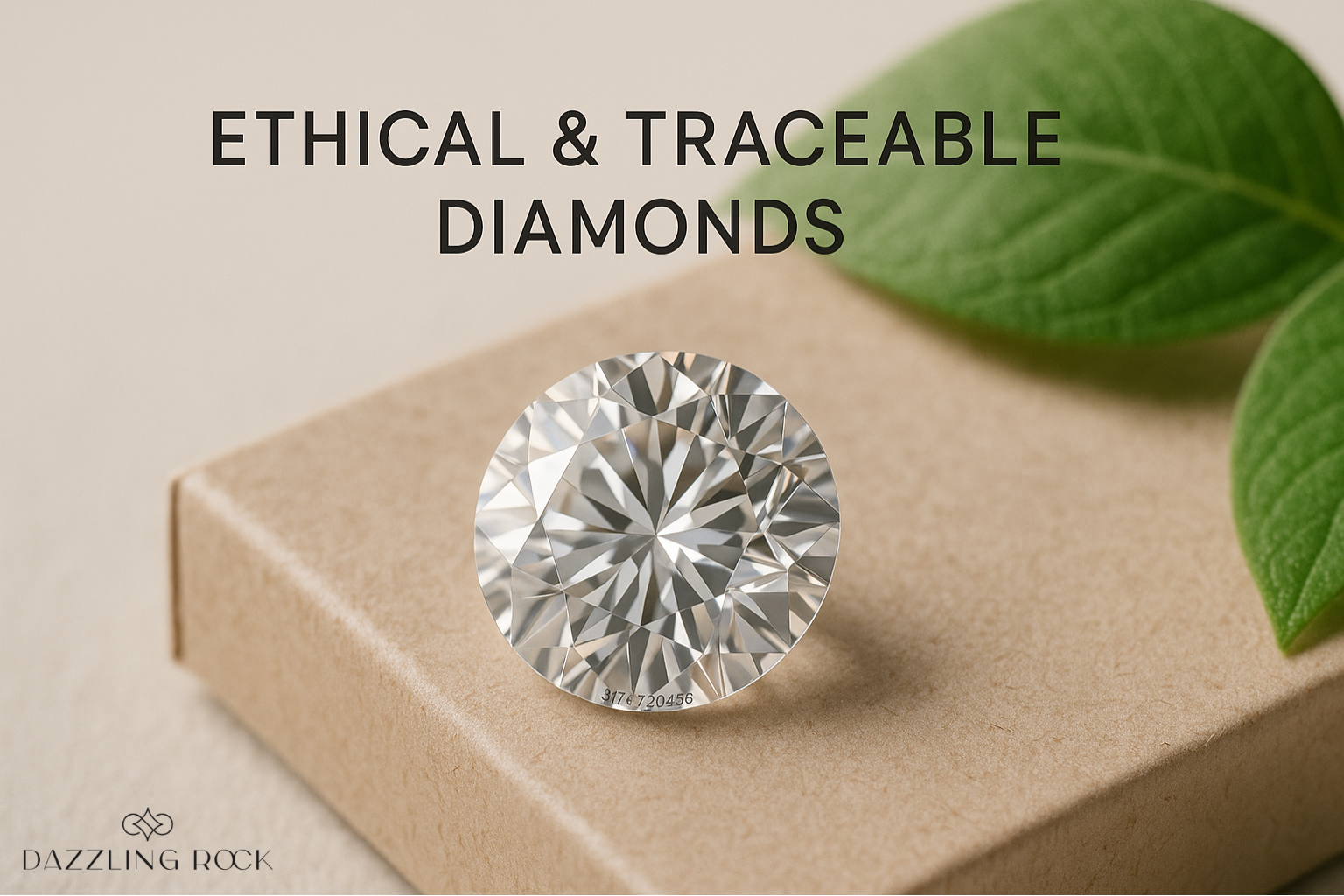
Ethical & Traceable Diamonds: How to Verify Conflict-Free Sourcing
Introduction
Today’s engagement ring shoppers—especially Millennials and Gen Z couples—want more than just sparkle. They want assurance that their diamond was sourced responsibly, without funding conflict, environmental damage, or unethical labor. In fact, studies show that U.S. consumers are increasingly asking jewelers, “Where did this diamond come from?”
But with complex supply chains spanning continents, verifying a truly ethical and traceable diamond can be confusing. In this guide, we’ll explain what “conflict-free” really means, how to verify sourcing, and the certifications and practices you should demand before buying.
What Does “Conflict-Free” Mean?
The term “conflict diamond” (or “blood diamond”) refers to diamonds mined in war zones and sold to finance armed conflict. To combat this, the Kimberley Process Certification Scheme (KPCS) was established in 2003.
- Kimberley Process: Requires participating countries to certify shipments of rough diamonds as conflict-free.
- Strengths: Reduced trade in conflict diamonds significantly.
- Limitations: Critics argue it doesn’t address environmental harm, human rights abuses, or smuggling.
For U.S. buyers: Kimberley Process compliance is important, but it’s just the starting point.
Beyond Conflict-Free: What “Ethical Diamonds” Mean
“Conflict-free” ≠ “Ethical.” A diamond may be conflict-free yet still involve:
- Unsafe labor conditions
- Child labor
- Environmental damage (deforestation, water contamination)
- Lack of community benefit
An ethical diamond goes further: responsibly sourced, environmentally conscious, and beneficial to mining communities.
How to Verify Diamond Traceability
- Ask for Origin Documentation
- Certificates should clearly state the country of origin.
- Example: Canadian diamonds are often laser-inscribed with mine information.
- Check for Third-Party Certifications
- Responsible Jewellery Council (RJC): Certifies supply chains.
- SCS-007 Certification: Emerging standard for sustainability in diamonds.
- Fairmined & Fairtrade Gold (for settings).
- Choose Retailers with Transparency Policies
- Brands that publish sourcing policies are easier to verify.
- Some retailers now use blockchain technology for end-to-end diamond traceability.
Canadian Diamonds: The Benchmark in Traceability
- Mines in Canada (e.g., Diavik, Ekati) are known for strict environmental and labor standards.
- Canadian diamonds are often laser-inscribed with serial numbers for traceability.
- Popular among U.S. buyers seeking verified ethical origin.
Lab-Grown Diamonds: The Alternative
- 100% conflict-free by origin since they’re created in labs.
- Lower environmental impact compared to some mining operations.
- Must still consider energy sources (renewable vs fossil fuel use).
Lab-grown diamonds are often chosen by U.S. buyers specifically for ethical and environmental reasons.
Sustainable Practices in Jewelry Settings
Ethics extend beyond the stone. When evaluating your engagement ring:
- Recycled metals (gold, platinum) reduce environmental impact.
- Fairmined or Fairtrade-certified gold ensures ethical labor practices.
- Jewelers like Dazzling Rock can provide sustainable options for both stones and settings.
Red Flags to Watch For
- Vague claims like “responsibly sourced” without documentation.
- No certification or traceability paperwork.
- Unwillingness to share supply chain details.
- Diamonds from high-risk conflict regions without Kimberley compliance.
Quick Comparison: Natural vs Lab-Grown Ethical Options
| Option | Traceability | Conflict-Free | Environmental Impact | Resale Value |
|---|---|---|---|---|
| Natural, uncertified | Low | Not guaranteed | Varies, often high | Stronger |
| Natural, certified | Medium-High | Kimberley + docs | Moderate | Stronger |
| Canadian diamond | Very High | Yes | Strict environmental standards | Strong |
| Lab-grown diamond | 100% | Yes | Depends on energy source | Limited |
How to Ask the Right Questions (U.S. Buyer Checklist)
- Is this diamond Kimberley Process certified?
- Can you provide the country of origin?
- Do you offer traceable sources?
- Is the ring made with recycled or Fairmined gold?
- Does the diamond have laser inscription or blockchain tracking?
- Which third-party certifications (RJC, SCS, Fairmined) back this stone?
If a jeweler struggles to answer these, proceed with caution.
FAQs
Q: Are all diamonds in the U.S. conflict-free?
By law, all diamonds imported into the U.S. must comply with the Kimberley Process. However, that doesn’t guarantee full ethical sourcing.
Q: Are lab-grown diamonds more ethical?
Yes, they are inherently conflict-free, though sustainability depends on production practices.
Q: What’s the most traceable natural diamond?
Canadian diamonds, thanks to strict tracking and laser inscriptions.
Q: How do I verify a jeweler’s claims?
Ask for written documentation and certifications; don’t rely on verbal assurances.
Conclusion
Buying an engagement ring today isn’t just about size, sparkle, or price—it’s also about values. By choosing ethical and traceable diamonds, you ensure your love story doesn’t come at the expense of others.
Whether you prefer a natural Canadian diamond, a responsibly certified stone, or a lab-grown diamond, Dazzling Rock offers conflict-free, transparent, and customizable engagement rings so you can shop with confidence.