
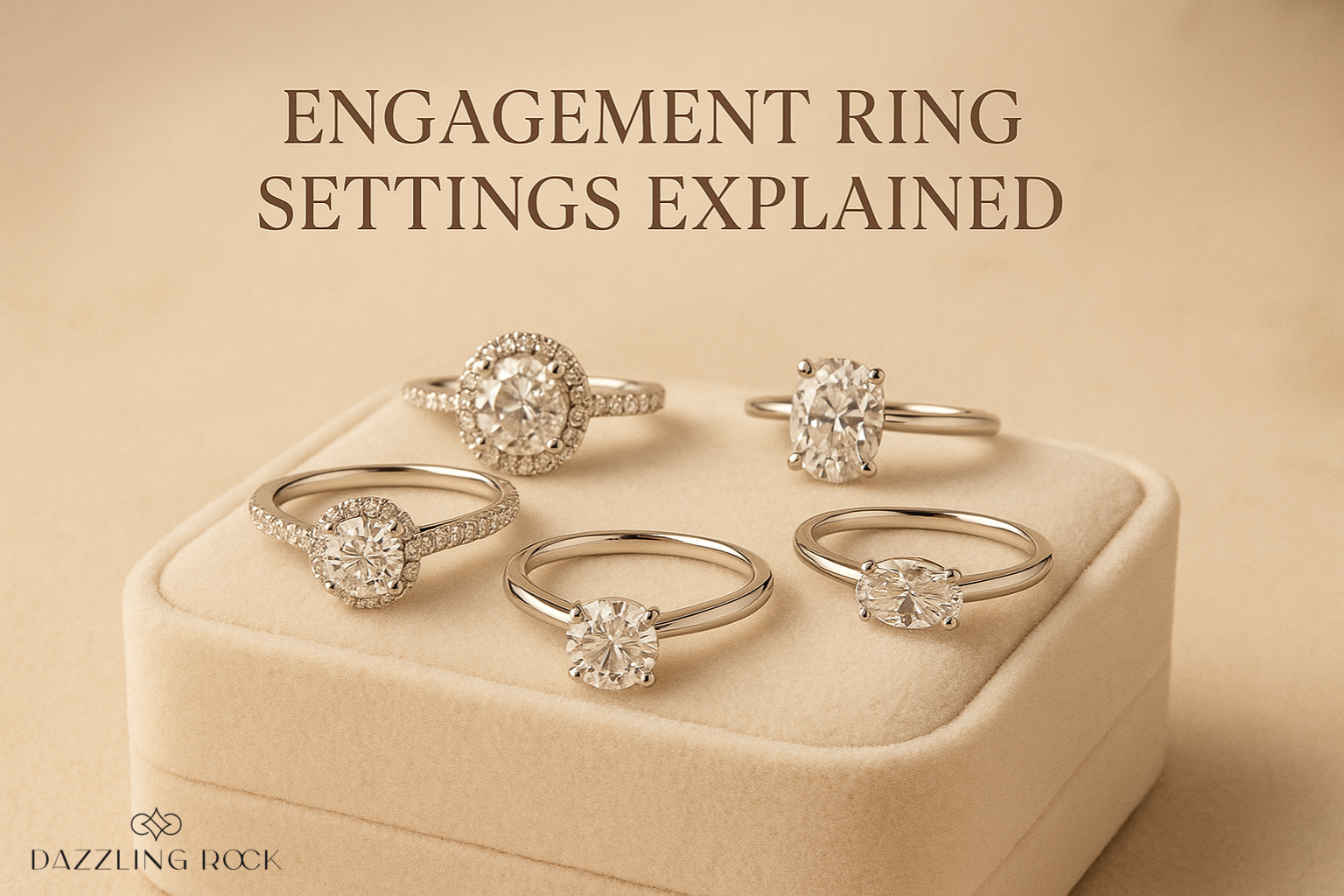
Engagement Ring Settings Explained: Hidden Halo, Cathedral, East-West & More
Introduction
When most people think of engagement rings, the focus is usually on the diamond—its cut, size, or sparkle. But equally important is the setting: the design that holds your diamond in place. The setting not only impacts the overall style of your ring but also affects its durability, comfort, and how big your stone looks.
Whether you prefer a timeless solitaire, a glamorous halo, or a modern east-west design, the right setting can make your engagement ring truly unique. In this guide, we’ll break down the most popular engagement ring settings in the U.S. today—explaining what makes each style special, its pros and cons, and which personality types they suit best.
Engagement Ring Settings: Comparison at a Glance
| Setting Type | Sparkle Level | Daily Wearability | Best For | Price Range |
|---|---|---|---|---|
| Solitaire Prong | Maximum | Good | Classic, timeless style | $500 – $3,000+ |
| Bezel | Moderate | Excellent, most durable | Active lifestyles, minimalist style | $600 – $2,500+ |
| Halo | Maximum | Good | Maximum sparkle; budget-stretching | $800 – $4,000+ |
| Pavé Band | High | Moderate requires cleaning | Added sparkle; glamorous look | $900 – $5,000+ |
| Three Stone | High | Good | Symbolic meaning: anniversary upgrades | $1,000 – $6,000+ |
| Tension | High | Moderate less secure for large stones | Modern, architectural style | $1,200 – $5,000+ |
| Channel Set | Moderate | Excellent | Clean, flush look; active wearers | $700 – $3,500+ |
What Is an Engagement Ring Setting?
The setting is the structure that secures your gemstone and defines the ring’s design. Settings influence:
- Durability: How well the stone is protected.
- Appearance: The style, silhouette, and sparkle.
- Comfort: How the ring feels on your finger.
- Cost: Some settings require more metalwork or smaller side stones, increasing the price.
Think of the diamond as the star and the setting as the stage that enhances its performance.
The Most Popular Engagement Ring Settings
1. Solitaire Setting
- Description: A single diamond set on a plain band.
- Pros: Classic, timeless, makes the diamond the focus, usually lower cost.
- Cons: Offers less protection for the stone; simple style may feel too minimal for some.
- Best for: Traditionalists who want a ring that never goes out of style.
2. Halo Setting
- Description: A circle of smaller diamonds surrounds the center stone.
- Pros: Maximizes sparkle, makes the center diamond appear larger, and adds a glam factor.
- Cons: Can be harder to clean; slightly more fragile with more small stones.
- Best for: Brides who love sparkle and want the appearance of a bigger diamond without the price.
3. Hidden Halo Setting
- Description: A subtle halo placed beneath the main stone, visible from the side.
- Pros: Adds sparkle and uniqueness without overpowering the center diamond.
- Cons: Slightly higher maintenance due to hidden small stones.
- Best for: Brides who want understated elegance with a surprise detail.
4. Cathedral Setting
- Description: The band rises gracefully on both sides, arching toward the diamond like cathedral arches.
- Pros: Creates a regal, elevated look; makes stone appear larger.
- Cons: Higher profile may snag on clothing; less ideal for very active wearers.
- Best for: Brides who love vintage or elegant architecture-inspired designs.
5. East-West Setting
- Description: The diamond is set horizontally instead of vertically.
- Pros: Modern, trendy, unique orientation; great for elongated cuts (oval, emerald).
- Cons: Less traditional; limited availability in mass-market stores.
- Best for: Brides who want something stylish and different.
6. Three-Stone Setting
- Description: A center diamond flanked by two side stones.
- Pros: Symbolizes past, present, and future; offers added sparkle.
- Cons: Can be bulkier; requires careful stone matching.
- Best for: Romantic brides who value symbolism and statement style.
7. Bezel Setting
- Description: A thin metal rim encircles the diamond.
- Pros: Very secure, protects diamond edges, sleek and modern.
- Cons: Can make the stone appear smaller; less sparkle compared to prong.
- Best for: Active lifestyles or brides seeking minimalist, contemporary looks.
8. Pave Setting
- Description: The band is “paved” with tiny diamonds for added sparkle.
- Pros: Sparkly band enhances center stone; customizable designs.
- Cons: Tiny stones may loosen over time; requires more maintenance.
- Best for: Brides who want full sparkle and luxury detail.
9. Vintage/Antique-Inspired Settings
- Description: Filigree, milgrain, and intricate details inspired by the Victorian or Art Deco eras.
- Pros: Unique, detailed craftsmanship, timeless character.
- Cons: Can be harder to resize or repair; sometimes less durable.
- Best for: Brides who love history, character, and unique artistry.
10. Tension Setting
- Description: The diamond is held in place by the pressure of the metal band, appearing to float.
- Pros: Modern, minimalist look; diamond is highly visible.
- Cons: Requires expert craftsmanship; resizing can be difficult.
- Best for: Brides who want bold, modern aesthetics.
How Settings Impact the Look of Your Diamond
- Halo & hidden halo: Make the diamond look larger.
- Cathedral: Elevates the stone, enhancing perceived size.
- Bezel: Protects but may visually reduce stone size.
- East-west: Creates uniqueness for elongated stones.
Your setting can add visual carat weight without the extra cost.
Practical Considerations When Choosing a Setting
- Lifestyle: Active wearers should consider bezel or low-profile settings.
- Budget: Solitaire is the most budget-friendly; halos and pave add cost.
- Maintenance: More stones = more upkeep (halo, pave).
- Durability: Bezel and cathedral are highly protective; tension requires careful handling.
Conclusion
The setting you choose defines the character, comfort, and longevity of your engagement ring. From the simplicity of a solitaire to the elegance of a hidden halo or the boldness of an east-west, your setting should align with your lifestyle, budget, and personal style.
At Dazzling Rock, we offer all of these settings—crafted with care, certified stones, and flexible customization options—so you can find the ring that perfectly matches your love story.
Frequently Asked Questions: Engagement Ring Settings
Q: What is the most popular engagement ring setting?
The solitaire prong setting remains the most popular engagement ring setting in the U.S. It features a single center stone held by four or six prongs, allowing maximum light to enter the diamond for brilliant sparkle. Its classic, timeless look transcends trends. At Dazzling Rock, solitaire settings are available in platinum, white gold, yellow gold, and rose gold.
Q: What is the best setting for a lab-grown diamond?
Lab-grown diamonds look exceptional in any setting since they are physically identical to natural diamonds. The solitaire prong setting is ideal to showcase a lab-grown stone’s brilliance. The halo setting is popular for making a lab-grown diamond appear larger — a great way to maximize visual impact on a budget. The bezel setting is best for active wearers as it fully secures the stone.
Q: Prong vs. bezel setting — which is better for everyday wear?
For everyday wear, a bezel setting is more practical. It fully encases the girdle of the diamond in metal, providing maximum protection against chips and reducing the risk of snagging on fabric. Prong settings allow more light in for greater sparkle, but the prongs can wear over time and may catch on clothing. Many active women prefer bezel settings for their security and modern aesthetic.
Q: How do I choose the right setting for my lifestyle?
Consider how active your lifestyle is. For office work or light activity, prong or halo settings are beautiful options. For hands-on professions, fitness-focused lifestyles, or frequent outdoor activities, a bezel or channel setting offers better protection. Also consider your finger shape — elongated settings like ovals and cushions in a solitaire can make fingers appear longer and more slender.
Q: What setting makes a diamond look biggest?
A halo setting makes a diamond appear significantly larger, as the surrounding ring of smaller diamonds visually extends the size of the center stone. The hidden halo setting achieves a similar effect more subtly. An oval or marquise cut in a solitaire setting also maximizes face-up visual size. At Dazzling Rock, our halo engagement rings are available with both natural and lab-grown center stones.